Growing Roses: Types, Care And Pruning Tips, With A TikTok Downloader For Your Garden Videos
Roses have a reputation for being fussy, but most of what they need comes down to sun, steady water, good airflow and a confident prune once a year.
Oct 25, 2026
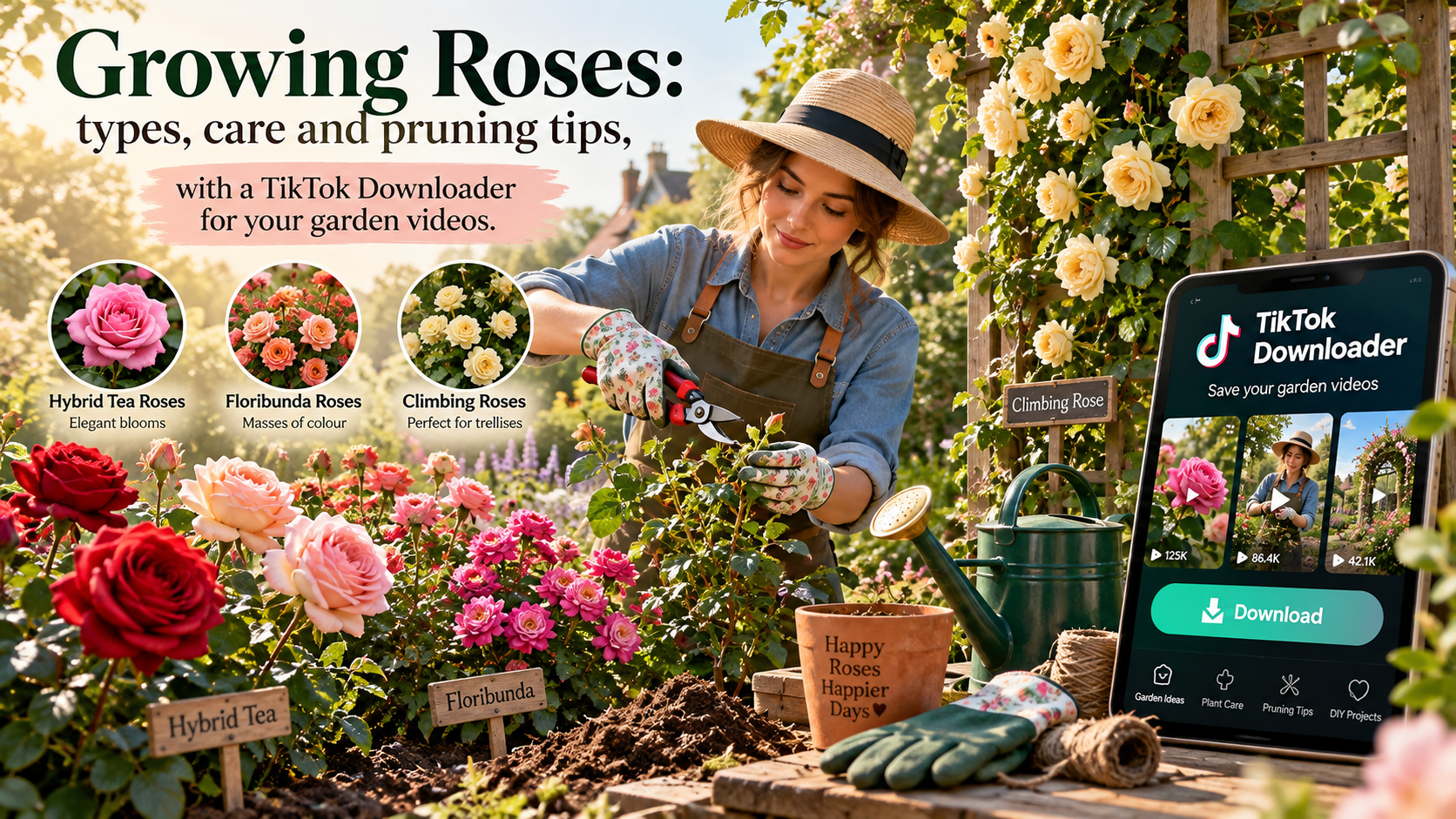
Roses have a reputation for being fussy, but most of what they need comes down to sun, steady water, good airflow and a confident prune once a year. Many gardeners now learn those skills from short videos, and a TikTok Downloader makes it easy to keep the useful ones on your phone for the moment you're at the rose bed with pruning shears in hand. Below is a practical guide to choosing, planting and caring for roses, followed by how to build a small library of rose-care clips.
For saving those clips, SSSTik works as a tiktok video downloaderin any web browser. The final section explains how to use it for garden tutorials.
What Makes A Rose A Rose
Roses belong to the genus Rosa, which includes more than a hundred wild species and thousands of cultivated varieties. Wild roses often have simple five-petaled flowers, while garden varieties range from loose, open blooms to tightly packed, cupped flowers with dozens of petals. Colors run from white and cream through yellow, apricot and pink to deep red. Fragrance varies just as much: some modern varieties were bred mainly for shape and color, while many older types are prized for their scent.
The Main Types Of Roses
- Hybrid teas: one large, high-centered bloom per long stem, the classic florist's rose.
- Floribundas: clusters of smaller flowers on bushy plants, with lots of color through the season.
- Grandifloras: tall plants that combine hybrid tea-style blooms with floribunda-style clusters.
- Climbers: long, stiff canes you can train on walls, fences, arches and trellises.
- Ramblers: vigorous, flexible canes, often covered in small flowers once a year.
- Shrub and landscape roses: hardy, disease-resistant plants bred for easy care and usually the best choice for beginners.
- Miniatures: compact plants with small blooms, suited to pots and border edges.
- Old garden roses: classes that existed before 1867, when the first hybrid tea appeared, often known for strong fragrance.
Choosing A Spot And Planting
Roses flower best with at least six hours of direct sun a day, and morning sun helps by drying dew off the leaves early. Choose well-drained soil rich in organic matter. Slightly acidic soil, around pH 6.0 to 6.5, suits most varieties. Leave enough space between plants for air to move through the foliage, which cuts down on fungal disease.
Plant bare-root roses while they're dormant, in late winter or early spring once the ground can be worked. Container-grown roses can go in any time from spring to early fall. Soak bare-root plants for a few hours first, and dig a hole wide enough to spread the roots. On grafted roses, the bud union is the knobby point where the variety joins the rootstock. Set it slightly below the soil in cold regions, and at or just above soil level in mild ones.
Water, Food And Mulch
Water deeply at the base of the plant rather than sprinkling the leaves. About an inch of water a week is a common guide, with more during hot, dry spells and for roses in containers. Watering in the morning gives any splashed leaves time to dry.
Start feeding in spring when new growth appears, using a rose or flower fertilizer as the label directs. Stop about six to eight weeks before your first expected frost so the plant can harden off for winter. A 2-to 3-inch layer of mulch keeps roots cool and holds moisture. Keep it a few inches away from the canes.
Pruning Without Fear
Prune most repeat-flowering roses in late winter or early spring, as the buds begin to swell. Start with the three Ds: remove anything dead, damaged or diseased. Then take out canes that cross or crowd the center, aiming for an open shape that lets in light and air. Make each cut about a quarter inch above an outward-facing bud, angled so water runs off.
Once-flowering climbers and ramblers are different. They bloom on the previous year's growth, so prune them right after flowering. Pruning them in spring cuts off that year's flowers.
Through summer, deadhead repeat bloomers by snipping off spent flowers to encourage new ones. Stop in late summer or early fall so the plant can form hips and slow down before winter.
Common Problems And How To Prevent Them
- Black spot: dark spots on the leaves, which then turn yellow and drop. Clear away fallen leaves, water at the base and choose resistant varieties.
- Powdery mildew: a white, dusty coating on leaves and buds, common when warm days follow cool nights. Good airflow helps most.
- Aphids: clusters of small insects on new shoots and buds. A strong spray of water knocks them off, and ladybugs eat them.
- Japanese beetles, in parts of North America: metallic green beetles that chew flowers and leaves. Pick them off into soapy water in the morning.
Most problems are easier to prevent than to cure. Sun, spacing, clean ground under the plants and healthy soil stop many of them before they start.
Roses In A Vase
Cut roses in the morning or evening, when the stems are full of water, and choose buds that are just starting to open. Recut the stems at an angle before arranging, strip any leaves that would sit below the waterline, and change the water every day or two. Keep the vase away from heaters, direct sun and ripening fruit, which gives off ethylene gas that makes flowers fade faster.
What Rose Colors Traditionally Mean
The Victorian language of flowers gave each color a message, and many of those meanings survive: red for love, white for purity and new beginnings, pink for gratitude and admiration, yellow for friendship and orange for enthusiasm. They're traditions, not rules, so pick the color the person you're giving them to actually likes.
Using A TikTok Downloader For Rose-care Tutorials
Rose growers on TikTok share pruning demonstrations, ways to grow new roses from cuttings, garden bouquet arrangements and honest reviews of how a variety did over a season. These skills are easiest to learn by watching next to the plant itself, often somewhere with a weak signal and while wearing muddy gloves. A saved clip plays offline and pauses exactly where you need it.
To save one, copy the link from TikTok's Share menu, paste it into SSSTik and choose from the options shown for that post. Videos come as MP4 where that format is available, and in HD when TikTok has an HD version, so details like bud position and cut angle stay clear. If TikTok also stores a version without its logo overlay, SSSTik offers that file. It doesn't edit the TikTok watermark out of anything. There's no account to create, nothing to install, no fee and no download limit. It works in phone, tablet and desktop browsers, though each one saves files a little differently. Only public posts can be saved, and stories need to be saved within 24 hours, before they expire.
Sort your clips by task, such as pruning, planting, pests and cut flowers, so the right one is ready each season. If you film your own roses, download the TikTok videos you've posted and keep them as a bloom diary you can compare year to year. Other growers' videos are still theirs, so keep them for your own reference and send the original link when a friend needs the tip. SSSTik is independent of TikTok.
Latest Articles
Popular Articles